Chat with us, powered by LiveChat

CompTIA Stackable Certifications

CompTIA Stackable Certifications

Ready to take your IT career to the next level? In the evolving tech world, standing out is no easy task. Certifications are no longer just a bonus but a necessity to boost your career. But what if you could showcase not just one but a combination of certifications tailored to your specific career path? That’s where CompTIA Stackable Certifications come into play. Designed to validate your skills and showcase your expertise, these certifications help you stay competitive and in demand.

Whether you’re at the start of your IT journey or aiming to specialize in a particular field, CompTIA’s unique stackable program is the perfect way to prove your abilities and unlock exciting career opportunities. In this article, we will explore everything you need to know about these certifications, from what they are and their career paths, benefits, and the career-boosting potential they offer.

What are CompTIA Stackable Certifications?

CompTIA Stackable Certifications are a unique program that allows IT professionals to combine multiple CompTIA certifications into one to demonstrate broader skills and expertise within the respective field. Instead of earning one certification at a time stackable certifications let you build a comprehensive knowledge base, showing potential employers that you are well-versed in multiple areas of IT.

CompTIA has highlighted two career pathways for stackable certifications:

  • Infrastructure Career Pathway
  • Cybersecurity Career Pathway

Read More: A Complete Guide to CompTIA IT Certification Roadmap – 2026

Why Should You Consider CompTIA Stackable Certifications For Your IT Career?

Well, stacking certifications offers several key benefits that can help you stand out in the competitive IT job market. Here is a glimpse at some of these benefits.

➡ More Job Opportunities

In today’s job market, versatility is key! With CompTIA stackable certifications, you’re not just showcasing expertise in one area, you’re proving your ability to handle a wide range of IT tasks. This makes you an attractive candidate for employers looking for well-rounded professionals who can tackle complex challenges. Whether you’re hoping for a promotion or ready to switch roles, stacking certifications gives you the edge.

➡ Develop Specialized Skills

One of the best parts about stackable certifications is the ability to specialize in specific areas of IT. Whether you’re passionate about network security, cloud technologies, or IT support, stacking certifications can tailor your skillset to match your goals. This flexibility opens doors to a wide variety of roles and helps you carve out a niche in your desired field.

➡ Boost Your Earning Potential

Here’s the reality. The more skills you bring to the table, the more you’re worth! By stacking CompTIA certification, you can position yourself for higher-paying opportunities. Employers are willing to pay more for professionals who can handle multiple tasks and have a deeper understanding of different IT domains. The more certifications you earn, the more valuable you become to organizations.

➡ Gain Credibility In The IT World

CompTIA is one of the most respected names in IT certifications, and having stackable certifications under your belt shows that you’re serious about your career. It is proof that you have invested time and effort to obtain both foundational and advanced knowledge and skills, making you a trusted professional in the eyes of employers and peers.

➡ Stay Ahead In A Dynamic Industry

The world of IT doesn’t stand still and neither should your skills. CompTIA’s stackable certifications help you stay on top of new technologies and trends, ensuring you’re always ready to adapt to industry shifts. By stacking certifications, you continue to learn and grow, making sure you’re not left behind as the tech world evolves. 

Learn More About: Benefits Of Getting IT Certifications in 2026

How Do CompTIA Stackable Certifications Work?

So, how exactly do CompTIA Stackable certifications work? Here is a step-by-step breakdown so you can better understand how to make the most of this unique certification pathway.

⇒ Start With A Foundation

Everything begins with a foundational certification like the CompTIA A+, CompTIA Network+, or CompTIA Security+. These certifications build your base knowledge of IT support, networking, and cybersecurity, setting you up for success. They’re essentially the building blocks you need before diving into more advanced certifications. Once you’ve mastered the basics, it is time to specialize. For example, if you’re interested in network management, you might go for CompTIA Network+ and then build on it with Cloud+ or SecurityX for more security-focused roles. 

CompTIA stackable certifications allow you to add layers of expertise in areas like cloud computing, cybersecurity, project management, and more.

⇒ Create Your Own Stack

One of the best parts about CompTIA stackable certifications is the flexibility to create your own stack based on your career goals. Whether you’re looking to advance in network administration, dive into cybersecurity, or become a cloud specialist, you can mix and match certifications to match your career aspirations. You can focus on multiple areas of expertise or go deep into a specific niche, whatever works best for you.

⇒ Achieve Professional Recognition

Once you’ve stacked certifications and gained proficiency in multiple areas, you’ll be ready to unlock new career opportunities. With CompTIA stackable certifications, you not only enhance your technical abilities but also earn recognition in the IT industry for your well-rounded expertise. Employers will notice your certification and you’ll be in a stronger position to take on more advanced roles.

⇒ Advance As You Grow

As you gain more experience in your IT career, you can continue stacking certifications. The more relevant certifications you stack, the more valuable you become. You can start with a foundational certification, specialize in specific areas, and eventually pursue professional-level certifications like CompTIA SecurityX, or CompTIA Cloud+. This stackable approach allows you to grow with the industry while always staying ahead of the curve. 

Learn More: Breaking Down SecurityX Cost In 2026

CompTIA Infrastructure Stackable Certifications

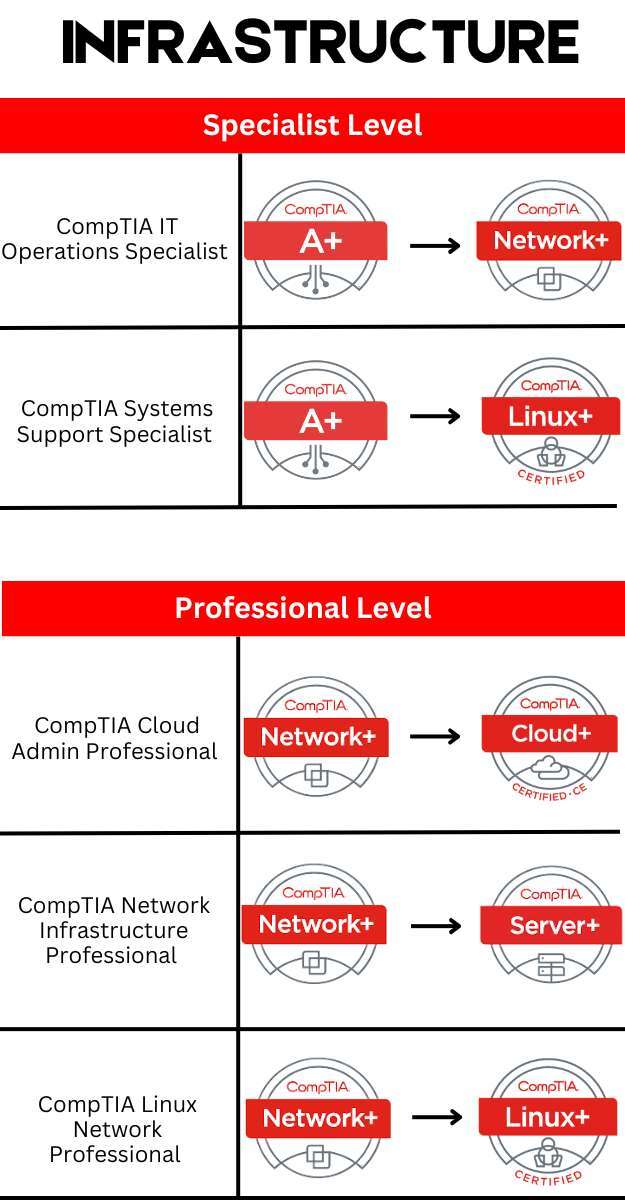
The CompTIA Infrastructure career pathway is designed to help you build a strong foundation and advance in IT roles focused on network management, cloud computing, and systems administration. Whether you’re just starting your career or looking to specialize, the pathway offers a progression of certifications that match different experience levels. The pathway is divided into 2 levels: Specialist and Professional. Each level builds upon the previous one, allowing you to develop the skills necessary for various IT infrastructure roles.

compTIA infrastructure stackable path

1. Specialist (0 – 2 Years)

For those just starting in the IT field or with limited experience, the specialist certifications focus on providing foundational knowledge that covers essential IT infrastructure skills. The recommended certifications for this level are:

◉ CompTIA IT Operations Specialist

a+ network+

Recommended Path:
A+ ➡ Network+

The CompTIA IT Operations Specialist (CIOS) is ideal for entry-level IT professionals who want to develop expertise in IT operations and support. It combines A+ (Core 1, Core 2), which covers the basics of hardware and software, with Network+, which focuses on networking concepts and troubleshooting. These two certifications give you a solid grounding in IT Infrastructure roles. 

Click here: CompTIA Network+ N10-008 vs. N10-009: What’s the Difference?

◉ CompTIA Systems Support Specialist

a+ linux+

Recommended Path:
A+ ➡ Linux+

For those interested in maintaining systems,  The CompTIA Systems Support Specialist (CSSS) pathway combines A+ with Linux+. Linux+ focuses on system administration in Linux environments which is a critical skill in many organizations alongside the fundamental hardware and software knowledge from A+. These specialist certifications set the stage for entry-level positions in IT operations, support, and systems management.

Read more: Updated Linux Certification Salary in US

2. Professional (2 – 5 Years)

Once you’ve gained some hands-on experience, the professional certifications allow you to deepen your expertise and take on more complex infrastructure tasks. These certifications are designed for mid-level IT professionals with 2 to 5 years of experience and cover more specialized areas of IT infrastructure management.

◉ CompTIA Cloud Admin Professional

network+ cloud+

Recommended Path:

Network+ ➡ Cloud+

The CompTIA Cloud Admin Professional (CCAP) pathway is ideal for those focusing on cloud infrastructure. It combines Network+ which provides a foundation in network operations with Cloud+, a certification that focuses on cloud technologies, deployment, and management. This certification helps you develop the skills needed to manage and optimize cloud environments effectively. 

◉ CompTIA Network Infrastructure Professional

network+ server+

Recommended Path:

Network+ ➡ Server+

For professionals looking to specialize in network infrastructure, The CompTIA Network Infrastructure Professional (CNIP) combines Network+ with Server+. This pathway prepares you for roles that require knowledge of networking as well as server management and maintenance. This path ensures you have the capability and skills to deliver complex infrastructure design projects from inception to delivery. 

◉ CompTIA Linux Network Professional

network+ linux+

Recommended Path

Network+ ➡ Linux+

If you want to work with Linux servers and networks, the CompTIA Linux Network Professional (CNLP) certification is an excellent choice. This combines Network+ with Linux+, equipping you with the skills to manage both Linux-based systems and networks in an enterprise environment. These professional certifications allow you to specialize in cloud computing, networking infrastructure, and Linux OS, positioning you for mid-level roles in IT infrastructure management. 

Why Pursue The CompTIA Infrastructure Pathway

The CompTIA infrastructure career pathway gives you the chance to specialize in various aspects of IT infrastructure including network management, cloud computing, server administration, and security. By following this structured progression, you’ll gain the necessary skills and expertise to excel in roles like:

  • Network Administrator
  • System Administrator 
  • Cloud Engineer
  • IT Infrastructure Manager 

Discover Further: CompTIA Tech+ Jobs To Pursue In 2026

CompTIA Cybersecurity Stackable Certifications

Cybersecurity is the second career path for CompTIA stackable certifications. This is targeted at individuals hoping to pursue a career in cybersecurity and protect organizations from cyber threats. This pathway offers a structured approach to building your cybersecurity expertise, starting from foundational concepts to advanced skills, and covers key certifications that progress based on your experience level. This career path has been broken down into three different experience levels: Specialist, Professional, and Expert. Each level focuses on developing more specialized and advanced cybersecurity skills.

cybersecurity stackable certifications path

Specialist (0 – 2 Years)

For those just starting out in the cybersecurity field, the specialist certifications offer foundational knowledge and help you build core skills in securing IT infrastructure. These certifications are ideal for professionals with little to no experience. Here is the Specialist CompTIA  cybersecurity stackable certification you can pursue if you fall into this experience level:

◉ CompTIA Secure Infrastructure Specialist

a+ network+ security+

Recommended Path

(A+ ➡ Network+ ➡ Security+)

The CompTIA Secure Infrastructure Specialist (CSIS) is a foundational certification path designed for individuals who want to focus on security within an IT environment. This stackable certification combines A+, Network+, and Security+. Security+ covers the basics of cybersecurity, such as risk management, threat analysis, and network security. This path helps you understand and secure networks, devices, and systems, making it an excellent starting point for any aspiring cybersecurity professionals. 

More about: How much does CompTIA A+ certification cost? Exam Fees and Budgeting Tips

Professional (2 – 5 Years)

Once you’ve gained a few years of experience in the field, you will want to deepen your skills and focus on specific aspects of cybersecurity. The professional certifications are designed for mid-level IT professionals looking to take on more specialized and technical cybersecurity roles. 

◉ CompTIA Secure Cloud Professional

security+ cloud+

Recommended Path
Security+ Cloud+

The CompTIA Secure Cloud Professional (CSCP) pathway is tailored for professionals looking to specialize in cloud security. It combines Security+, which focuses on fundamental cybersecurity principles, with Cloud+, addressing cloud infrastructure, security management, and risk mitigation in cloud environments. This pathway equips individuals with the ability to problem-solve technical security challenges on an enterprise level.  

Click here: Network+ vs Security+: Choosing the Right Path for a Successful Career in Networking and Cybersecurity

◉ CompTIA Security Analytics Professional

security+ cysa+

Recommended Path:

Security+ ➡  CySA+

The CompTIA Security Analytics Professional (CSAP) certification combines Security+ with CySA+ which focuses on security analysis, threat detection, and response. This certification helps professionals develop the skills necessary to monitor and protect networks, detect vulnerabilities, and respond to security incidents effectively. 

◉ CompTIA Network Vulnerability Assessment Professional

security+ pentest+

Recommended Path:
Security+ ➡ PenTest+

For professionals focusing on vulnerability management and penetration testing, The CompTIA Network Vulnerability Assessment Professional (CNVP) certification is an excellent choice. It combines Security+ with Pentest+, helping you develop the skills to assess and secure network systems through ethical hacking and vulnerability analysis.  

Look Further: COMPTIA PENTEST+ SALARY, CAREER AND WORTH

◉ CompTIA Network Security Professional

security+ pentest+ cysa+

Recommended Path:

Security+ ➡ Pentest+ ➡ CySA+

The CompTIA Network Security Professional (CNSP) pathway is designed for IT professionals who specialize in securing network infrastructure. It includes Security+, PenTest+, and CySA+ certifications, giving you comprehensive knowledge of network security, security analysis, and penetration testing. This particular certification path helps you secure and analyze networks to prevent cyber attacks or access by unauthorized users. 

Expert (Over 5 years)

For experienced cybersecurity professionals, the expert certifications provide advanced skills that allow you to take on leadership roles in cybersecurity. These certifications cover strategic management, complex security challenges, and high-level expertise in securing IT systems. Here are the cybersecurity expert stackable certifications you can pursue:

◉ CompTIA Security Analytics Expert

security+ cysa+ securityx

Recommended Path:

Security+ ➡ CySA+ ➡ SecurityX

The CompTIA Security Analytics Expert (CSAE) certification is ideal for security analysts. It includes Security+, CySA+, and SecurityX. With SecurityX being an advanced certification, this path equips you with the tools and strategies needed to protect critical systems, manage complex security environments, and prevent high-level cyber threats with the use of data analytics. 

Read more: Unlocking the Worth of CySA+ Certification

◉ CompTIA Secure Infrastructure Expert

security+ cysa+ pentest+ securityx

Recommended Path:

Security+ ➡ CySA+ ➡ PenTest+ ➡SecurityX

The CompTIA Secure Infrastructure Expert (CSIE) certification is designed for professionals looking to master all aspects of IT infrastructure security. This stackable certification combines Security+, CySA+, PenTest+, and SecurityX to create an advanced security expert. This pathway gives you expertise in securing networks, systems, cloud infrastructures, and devices while being able to design and manage comprehensive security solutions. 

Discover Insights On: Best Cybersecurity Certifications

Why Pursue The Cybersecurity Career Pathway

The CompTIA Cybersecurity career path provides a clear road to landing advanced cybersecurity roles. By following this pathway, you’ll gain the skills needed for a variety of roles in the cybersecurity field:

  • Security Architect 
  • Security Manager
  • Cybersecurity Engineer
  • SOC Manager
  • Penetration Tester
  • Chief Information Security Officer (CISO)

How To Get Started With CompTIA Stackable Certifications

Ready to obtain your required stackable certification? Getting started is easier than you might think. Here is a step-by-step guide to help you get started:

i) Assess Your Current Skill Level

Before you start stacking certifications, it is first important to assess where you currently stand. If you’re new to IT, starting with foundational certifications like CompTIA A+ is a smart choice. This means opting for a specialist pathway. If you already have some experience, you might opt for a professional-level stackable certification to build on your existing knowledge. Understanding your skill level will help you choose the right certifications to kickstart your stack.

ii) Choose The Right Certification Path

Once you have a clear understanding of your current skill set, the next step is to select the certification path that aligns with your career goals. Whether you’re interested in cybersecurity or infrastructure, there are different combinations of paths you can explore. Focus on the path that will not only enhance your technical skills but also help you reach the job roles you aspire to.

iii) Preparing For The Relevant Exams

Preparation is key when it comes to getting your required CompTIA certifications. For each certification in your stack, take the time to study the exam objectives thoroughly. Make use of CompTIA’s official study guides, online courses, practice tests, and training to get an in-depth understanding of the material. Using multiple study resources will ensure you’re well-prepared and confident going into the exam.

iv) Taking The Exams

After preparing, it is time to sit for your certification exams. You can take most CompTIA exams online or at Pearson VUE test centers, depending on your preference. Make sure to review the exam details, such as the number of questions, exam format, and time limits to ensure you’re aware of all your constraints before you attempt the exam.

v) Build Your Stack

The great thing about CompTIA Stackable certifications is that you don’t need to complete them all at once and can take them step by step as you feel ready. Once you’ve obtained your first initial certification, it is then time to build your stack and work towards obtaining the other certifications in your stack. This step-by-step approach allows you the time to prepare sufficiently and progress gradually at your own pace in your career journey! Start with foundational certifications, progressing to more specialized ones as you gain exprience and knowledge in the field.

vi) Maintain Your Certifications

To maintain your certifications, make sure you stay updated with the changes in the industry. CompTIA certifications have a life of 3 years, after which maintenance is required in order to keep your credentials relevant. You will need to renew your certification before the expiration date which will be three years from the date you earned your certification. In order to renew your certification, you will need to obtain a specific number of Continuing Education Units (CEUs). You will need to pay a renewal fee before you begin the renewal process. In addition, another way of maintaining your certification is to obtain a high-level CompTIA certification.

Explore Further: A Roadmap To CompTIA SecurityX Certification In 2026

Winding It Up

In this guide, we’ve covered everything about CompTIA Stackable certifications from what they are to the specific pathways you can pursue! It is clear that Stackable certifications provide a structured, flexible way to advance your IT career. Whether you’re aiming to specialize in infrastructure or cybersecurity, these pathways offer a clear roadmap to develop in-demand skills and expertise and open doors to exciting new career opportunities.

Start with foundational certifications like CompTIA A+ or Network+ and build your way up to explore more advanced roles. Having a stack of well-recognized certifications on your resume will definitely help you stand out and progress more quickly in the competitive job market of today. 

Frequently Asked Questions (FAQs)

Yes! CompTIA stackable certifications are highly regarded in the IT industry. They not only validate your knowledge and skills but also offer a structured path to career progression. Since CompTIA certifications are well-recognized, having multiple certifications not only improves your credibility but makes you more competitive in the job market. These certifications are aligned with real-world job roles ensuring you are equipped with the knowledge and expertise employers seek. 

Yes! Most CompTIA certifications are valid for three years from the date of getting certified. To maintain your stackable certifications, you can renew the individual certifications through the CompTIA Continuing Education Units (CEUs).

The CompTIA IT Operations Specialist (CIOS) is one of the most popular stackable certifications. It involves obtaining the A+ as well as the Network+ certification. This is because it can serve as a foundational certification for IT professionals who are aiming to build expertise in foundational IT infrastructure and network roles making it a common choice for beginners.

In order to prepare effectively for your chosen CompTIA stackable certification, it is essential to have a strategic approach. Begin by choosing the pathway that aligns with your career goals and experience level. Once you know the certifications you need to prepare for, form a structured study plan, incorporating official resources and building a deeper understanding of the underlying topics. Top it off with practice to identify areas of weakness and work towards improving them.

Yes, CompTIA certifications have global recognition and are widely respected across the IT industry. As part of the CompTIA stackable certifications program, they are trusted by employers worldwide to validate an individual’s technical skills and knowledge, making them a valuable asset regardless of where you are in the world.

Share: Facebook LinkedIn X

GDPR